Off the mic, Cape Town rapper, Pincode has no personality. He struggles to answer simple questions like, “What accolades are you proud of as an artist?”, “What themes are you rapping about on your tape?” I failed to get anything out of him in an interview, he admitted that he’s a shy person by nature. I couldn’t help but wonder what chance he has in the music industry which sometimes becomes more about egos than anything else.
However, Pincode’s crass aura is thoroughly misleading. Albeit his social awkwardness, Pincode holds his own on the mic. His flow’s effortlessly fluid. He sounds comfortable, his voice projection may even give him away as an egotistical character, a far cry from what he actually is. His punchline-based lyrics are delivered with matching emotion and emphasis. He’s light on his feet on stage and exudes a natural confidence. And the streets love him!
Pincode, real name Thabang Marthinus was born in the Free State but is currently based in Mfuleni township in The Mother City where he has become a gem in the spaza scene. Spaza is a subgenre of hip hop that is done mainly in Xhosa and Cape slang, predominant in the black townships of the Western Cape. Ambassadors of spaza include Driemanskap, Rattex, Backyard Crew, Ndlulamthi, Khanyi and more. Pincode is part of a crew and indie production label called M4M alongside well-known spaza lyricists, Rheebongz and Buntu Jobela. We profiled Rheebongz here.
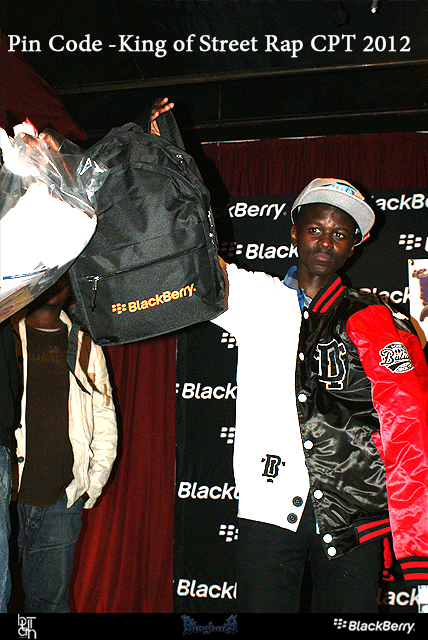
Pincode with his prizes after being crowned The King of Street Rap Cape Town in 2012.
My first encounter of the emcee was in 2012 when he was crowned The King of Street Rap Cape Town at the age of 17 by Slaghuis – a Johannesburg hip hop entity responsible for the well-known Slaghuis session in Soweto where rappers like Pro, F-Eezy and Siya Shezi cut their teeth. Pincode came out tops against eight other skilled emcees in the Slaghuis competition where emcees were battling track-for-track.
In 2013, without an album or mixtape out, Pincode won the Best Spaza Lyricist award at the Hip Hop Kaslam Awards, an award show that commemorates spaza. Pincode has paid his dues on a street level – he has performed in sessions around the Western Cap and outshone emcees in their own tracks when featured. His street hit, “Unlocker” and a few others, earned the emcee a legion of fans in the Western Cape and the Eastern Cape where his Xhosa lyrics are understood.
Pincode looks up to the likes of Busta Rhymes and Eminem, which could explain why the emcee’s rhymes are purposely flow-based. He recently released a mixtape titled Unlocked. He’s not sure what the tape’s supposed to do for him. He just felt he needed to drop a CD for his fans to buy after all the singles he’s been releasing online, he says.
Unlocked Mixtape Review
By Sipho Fako
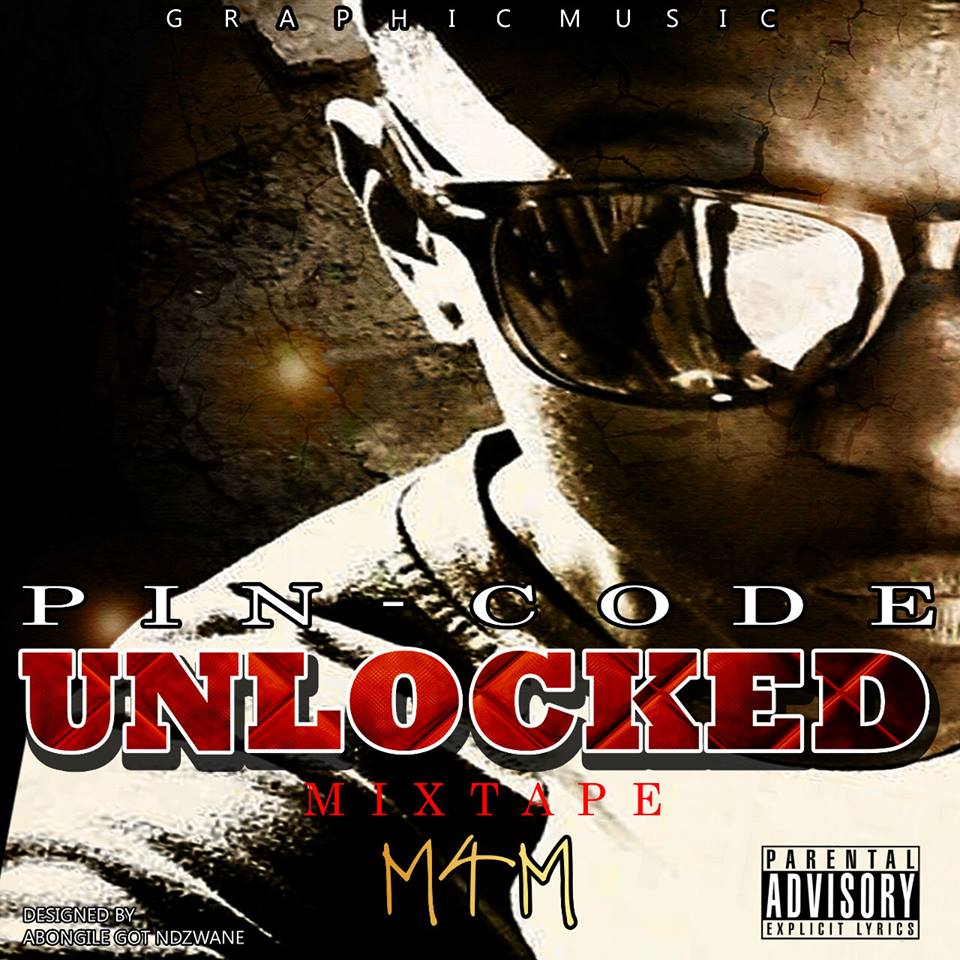
I first heard of Pincode around the time he released a track called “Unlocker” circa 2012. At the time, it was one of the freshest spaza tracks to be released that year. His punches were matched with a flow that not many could counter. Stumbling across his mixtape Unlocked, I was not sure what to expect. It was especially because of his accolades that I was curious to hear what this young man had to offer. Would he really be able to unlock the next level of spaza?
The tape is a nice mixture between kasi stories and punchlining that display this emcee’s skill. The listener (presuming he/she is Xhosa or understands the language very well), should find it easy to relate to the Code’s stories. As much as he excessively throws punchlines, they are usually intended to emphasise points, rather than to “kill”. What sets this tape apart from most of its new school spaza competitors, has to be the substance in the music.
Pincode successfully managed to give a brief overview of his life and some of the struggles he has encountered in just 16 tracks. He’s taken us through how kasi life is, with tracks like “Paper Chaser”, “Dezet”, and “Nothing but the Truth”. With tracks like “Confession”, “True Story” and “Phila Kay 1”, he is more introspective and leaves one with a whole lot to ponder over.
The beats are on fire, there are no complaints there, except for a little hate on the recycling of Twista and Nas beats on “Girl You Know” and “Lulama” respectively. I feel it’s unnecessary pressure on the artist. Let’s face it, we all think of the original tracks when such tracks come on.
Most of the songs are audible and well-mixed. There are only a few which just drop below the bar but would go unnoticed by the average ear.
Pincode really gave his best on each and every track on this tape. The way he seamlessly switches flows in tracks is one thing. Knowing what flow to use on which track is another. He could’ve easily gotten this wrong and flowed too much instead of actually telling his story but he didn’t. The listener is actually drawn to the Code’s descriptive stories before realising how much was actually done in the verses.
Tracks like “Dezet” and “Set a Day” are examples of how Pincode has mastered the art of fusing his emotions with flow and well documented stories.
This tape is definitely a must listen if you appreciate spaza or vernacular rap. It’s well-balanced and has a track that can accommodate any mood. It’s truly a good offering and is worth supporting.
Listen to an interview with Pincode on Cape Town hip hop radio show, Headwarmaz below:
All images from Pincode’s Facebook page.
Like Pinocle’s Facebook page, follow him on SoundCloud and download his music on Bozza.
This piece is done inline with Cape Town hip hop radio show, Headwarmaz, which airs every Friday on Bush Radio between 10pm and 1am. Read more editorials on Headwarmaz here and listen to the show on SoundCloud.